Jungsoo Kim
Background
I am a passionate problem solver with broad interests spanning both the humanities and technology.
Currently, I'm a Senior Data Scientist at the Francis Crick Institute. Before London, I served in the Republic of Korea Army and got my Ph.D. in the Department of Brain and Cognitive Sciences at the Massachusetts Institute of Technology. Working with Steve Flavell, I studied neural circuits underlying behavior in C. elegans using optical, genetic, and computational tools (such as deep learning and tailored Bayesian inference). Before grad school, I worked at the Rowland Institute at Harvard and received my undergraduate degree in Biological Engineering from Cornell University.
Outside of work, I enjoy reading, cycling, swimming, meditating, examining both my own life and that of others (e.g. reading biographies), following various topics (such as American history, investing, macroeconomics, and law), and learning about how various businesses operate and grow.
Degrees
Ph.D. in Neuroscience, Brain and Cognitive Sciences, Massachusetts Institute of Technology
B.S. in Biological Engineering, College of Engineering, Cornell University

Neurosecurity Observer examines how emerging neurotechnologies reshape security. Advances in neuroscience and engineering are moving technology directly into the brain and mind. Using my technical background, I write about forward-looking analysis on the risks, failure modes, and strategic implications of neurotechnologies, spanning individual safety and national security.
Thesis Project
Brain-wide representations of behavior spanning multiple timescales and states in C. elegans
I led, together with Adam Atanas, a pioneering neuroscience project that was published in Cell and featured in Scientific American. Our work involved developing innovative hardware and software solutions to image neural activity in freely behaving C. elegans. We then used probabilistic modeling to create the first comprehensive neural encoding dictionary of an organism.
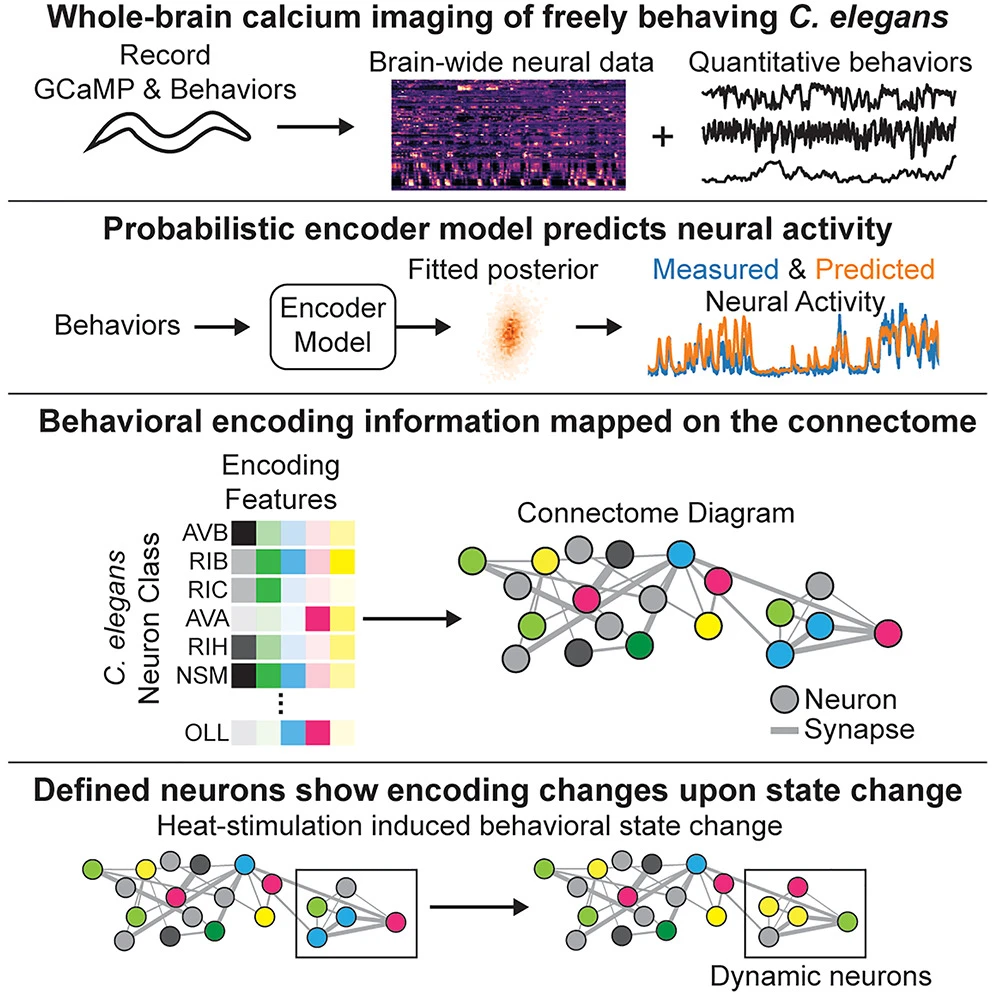
Simultaneous recordings of brain-wide activity and diverse behaviors in C.
elegans
Using a custom-engineered microscope, we recorded brain-wide neural activity
simultaneously with diverse motor behaviors in C. elegans.
We developed a custom software to extract neural traces at the cellular level with high
SNR.
Probabilistic encoder model describes how each neuron encodes behavior
We developed a probabilistic encoder model alongside tailored inference algorithms to
analyze neural data.
This approach provides detailed, interpretable descriptions of how individual neurons
encode specific behaviors.
Results mapped to connectome, yielding encoding atlas of C. elegans nervous
system
By integrating our models with the connectome, we generated a comprehensive encoding
atlas illustrating how genetically identified neuron classes in C. elegans encode
various behaviors.
Defined neurons flexibly change encoding in a state-dependent manner
Interestingly, we discovered that some neurons exhibit flexibility in encoding,
dynamically changing these properties depending on the behavioral state.
Projects
A quick look at some of my engineering and science projects
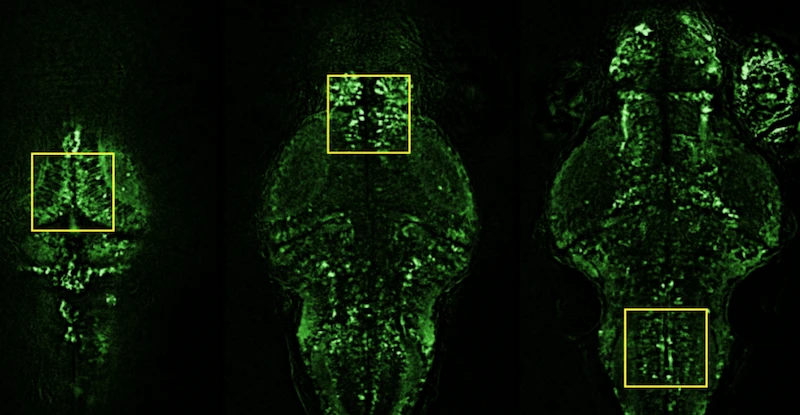
Brain-wide cellular-resolution imaging in freely behaving animal
World's first cellular-resolution, brain-wide neural activity imaging of freely behaving vertebrates
- Real-time image processing and model predictive control to perform motion cancelling
- DIFF, a structural illumination technique, to perform optical sectioning (3D imaging)
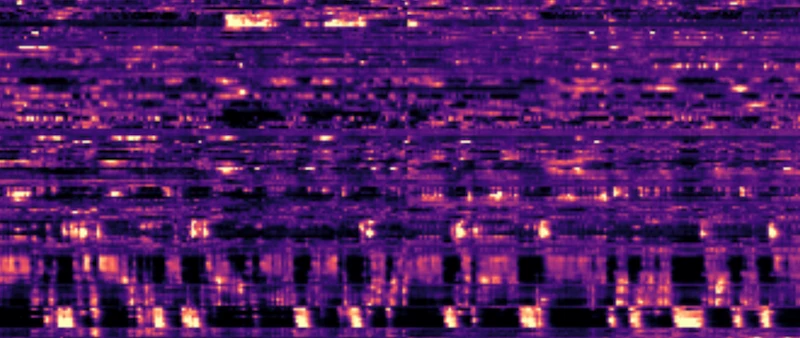
TB-scale Neural Data Processing Pipeline
An end-to-end software stack to process and extract neural activity from tens of terabytes of data
- Deep learning models for 3D tasks, custom GPU-accelerated motion correction and denoising
- HPC-deployed parallel processing
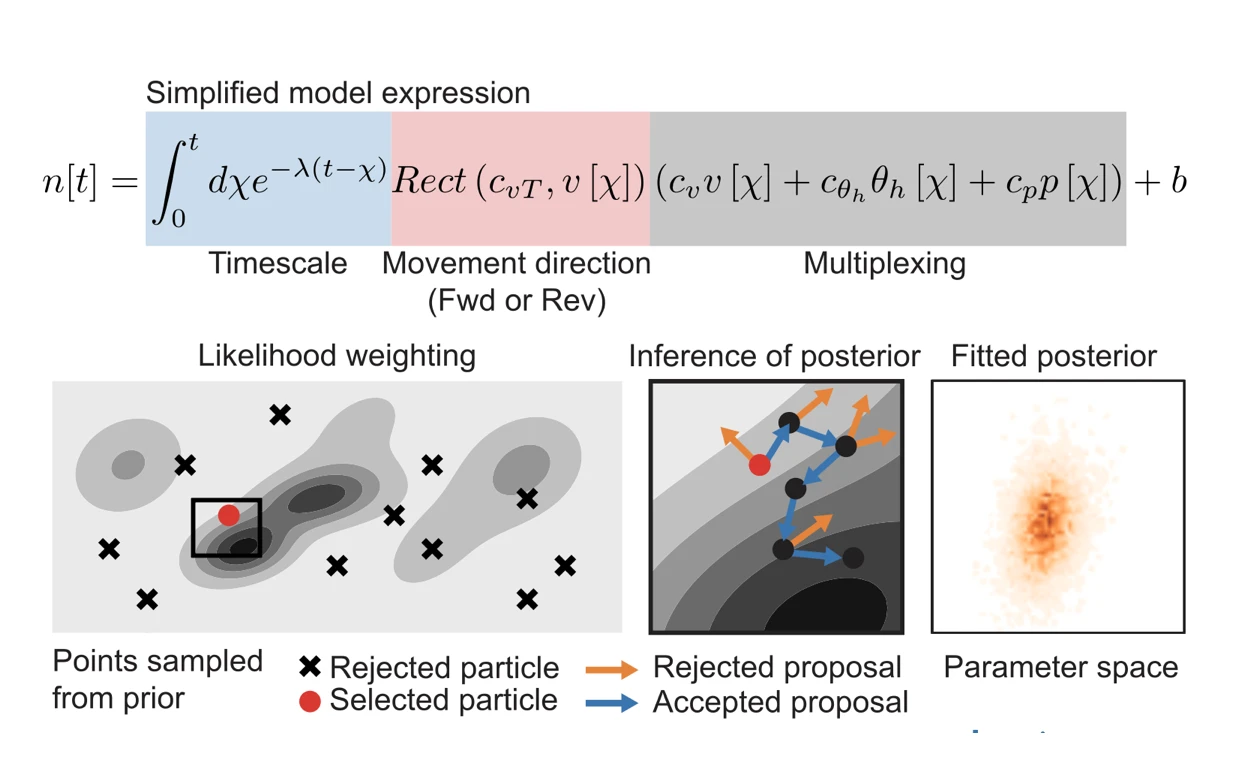
Probabilistic Generative Encoding Models
Probabilistic encoding models that link neural activity to rich behavioral state representations.
- Non-linear models to capture key neuronal encoding motifs
- Tailored inference algorithms using SMC with MCMC with HMC and MH with custom proposals
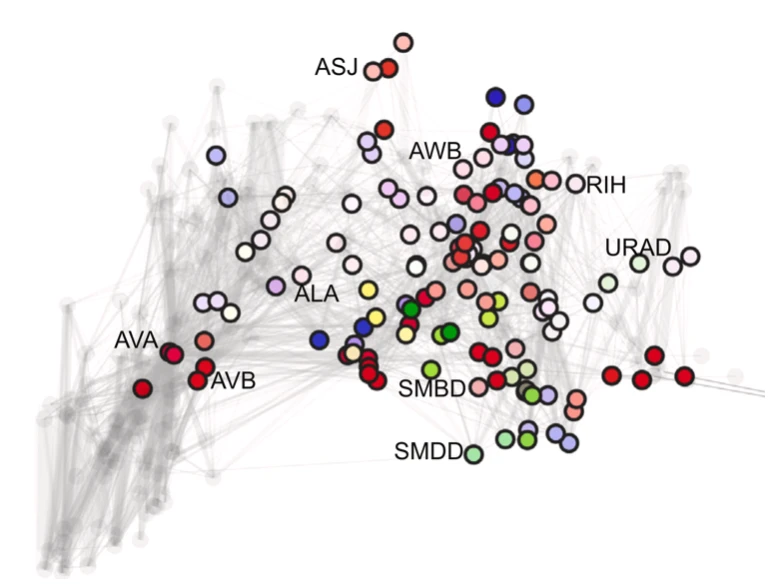
Mapping Functional Properties onto Connectome
Mapping learned encoding features onto the wiring diagram
- Inferred encoding properties from functional data mapped onto the connectome
WormWideWeb
An interactive web app to explore and visualize C. elegans neural datasets and connectomes
- Won the MIT Prize for Open Data
- Explore, search, plot, and download neural datasets
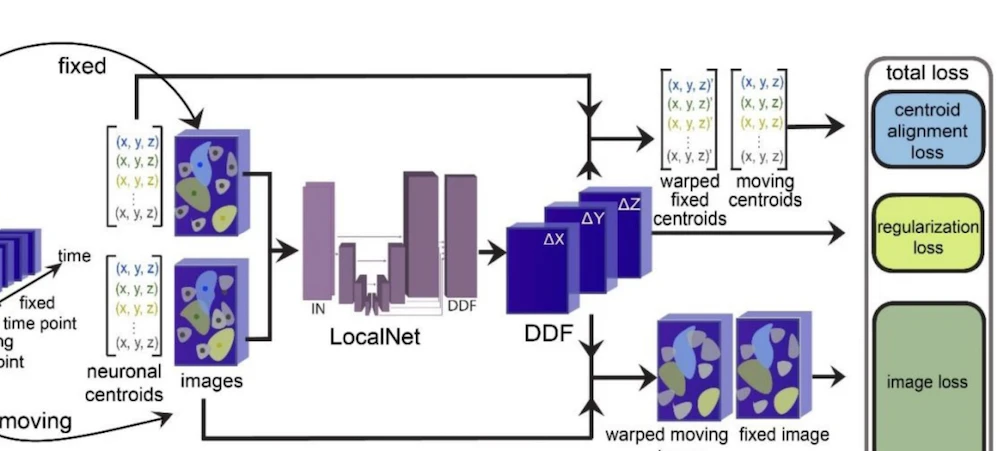
Deep-learning pipeline for 3D neural image processing
Pipeline to register, segment, and identify neurons
- 3D segmentation, volumetric non-rigid registration, and neuronal identity classification
Publications
Deep Neural Networks to Register and Annotate Cells in Moving and Deforming Nervous Systems
eLife, 2025
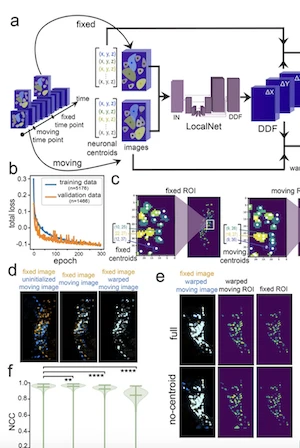
Adam A. Atanas, Alicia Kun-Yang Lu, Brian Goodell, Jungsoo Kim, Saba Baskoylu, Di Kang, Talya S. Kramer, Eric Bueno, Flossie K. Wan, Karen L. Cunningham, Brandon Weissbourd, Steven W. Flavell
Brain-wide representations of behavior spanning multiple timescales and states in C. elegans
Cell, 2023
Adam A. Atanas*, Jungsoo Kim*, Ziyu Wang, Eric Bueno, McCoy Becker, Di Kang, Jungyeon Park, Talya S. Kramer, Flossie K. Wan, Saba Baskoylu, Ugur Dag, Elpiniki Kalogeropoulou, Matthew A. Gomes, Cassi Estrem, Netta Cohen, Vikash K. Mansinghka, Steven W. Flavell
* equal contribution
Dissecting the functional organization of the C. elegans serotonergic system at whole-brain scale
Cell, 2023
Ugur Dag*, Ijeoma Nwabudike*, Di Kang*, Matthew A. Gomes, Jungsoo Kim, Adam A. Atanas, Eric Bueno, Cassi Estrem, Sarah Pugliese, Ziyu Wang, Emma Towlson, Steven W. Flavell
* equal contribution
Pan-neuronal calcium imaging with cellular resolution in freely swimming zebrafish
Nature Methods, 2017
Dal Hyung Kim, Jungsoo Kim, João C. Marques, Abhinav Grama, David G. C. Hildebrand, Wenchao Gu, Jennifer M. Li, Drew N. Robson
Contact

dopamine@alum.mit.edu